






We live in the unceded territory of the Mi’kmaq people


What is the municipal budget?
Every year, Council approves a municipal budget that helps guide how public funds will be used to support programs, services, infrastructure, and operations in the community.
The budget helps ensure services continue to operate while planning for future community needs.
Where does municipal revenue come from?
Municipal revenue may come from:
- Property taxes
- User fees and service charges
- Provincial and federal grants
- Transfers and partnerships
- Other municipal revenues
Property taxes are one of the primary sources of municipal funding.
What does the budget support?
Municipal budgets help fund services such as:
- Public works and infrastructure
- Parks and recreation
- Fire protection
- Policing partnerships
- Water and wastewater systems
- Snow clearing and road maintenance
- Community programs and facilities
What is the difference between an operating budget and a capital budget?
- The operating budget covers day-to-day services and costs, such as staffing, programs, maintenance, utilities, policing, fire services, and recreation.
- The capital budget covers larger projects and long-term investments, such as road work, equipment, facility upgrades, trails, sidewalks, and other infrastructure.
How does Council decide what to fund?
Council reviews priorities, community needs, service requirements, infrastructure needs, staff recommendations, and available funding. The budget process helps Council make decisions about what projects and services can move forward in a responsible way.
What are tenders and procurement?
Tenders and procurement are part of how the Town buys goods and services or hires contractors for certain projects. This process helps make sure public money is spent fairly, openly, and responsibly.
Why does the Town use tenders?
When the Town needs work completed, equipment purchased, or services provided, it may issue a tender, request for proposals, or other procurement opportunity. Businesses and contractors can submit bids or proposals, and the Town reviews them based on the requirements of the project
Does the lowest price always win?
Not always. Cost is important, but the Town may also consider experience, qualifications, project approach, timelines, safety, quality, and whether the submission meets the requirements. The goal is to choose the best value while following proper purchasing rules.
How can people find current tender opportunities?
The Town posts tender and procurement opportunities publicly so vendors, contractors, and service providers can review open opportunities and submit if they are interested. This helps keep the process transparent and fair.
Why does this matter to residents?
Budgeting and procurement affect how community projects are planned, approved, and completed. They help ensure public funds are used carefully and that residents receive reliable services and infrastructure.
What is Council?
In New Glasgow, residents elect a Mayor and six Councillors every four years to represent the community and make decisions on behalf of the municipality.
Council is responsible for setting the overall direction of the Town, establishing policies and bylaws, approving budgets, and helping guide long term priorities for the community.
Municipal government is often referred to as the level of government closest to the people because many of the decisions made by Council directly affect daily life in the community.
How is New Glasgow represented?
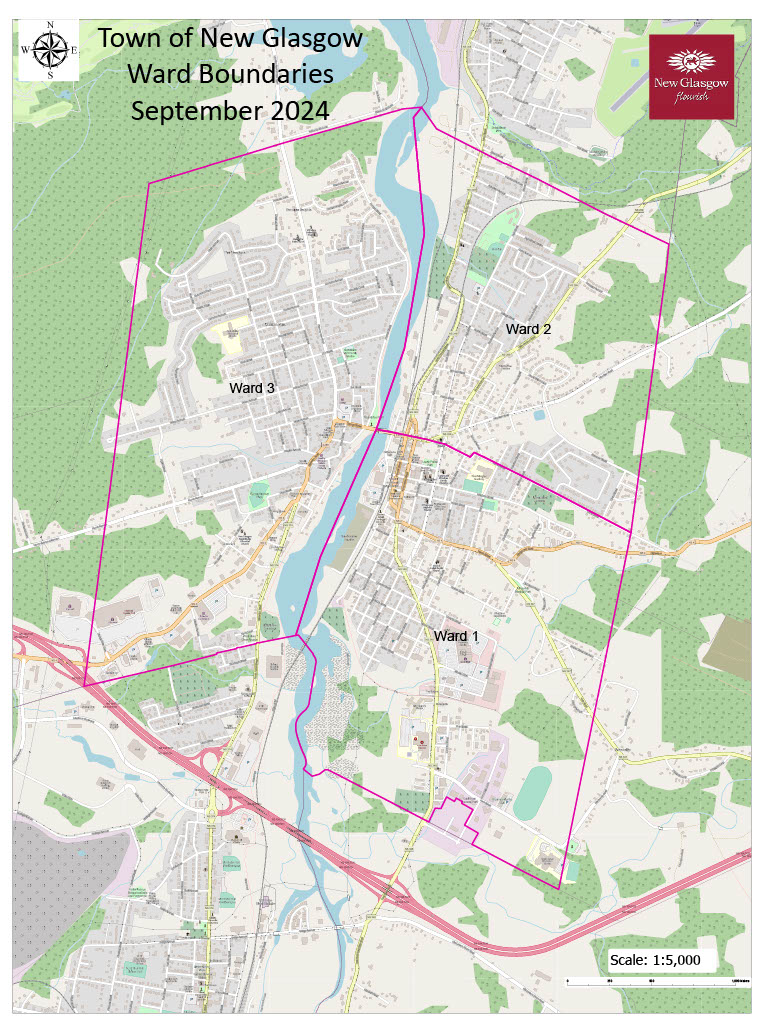
The Town of New Glasgow is divided into three wards:
- Ward One
- Ward Two
- Ward Three
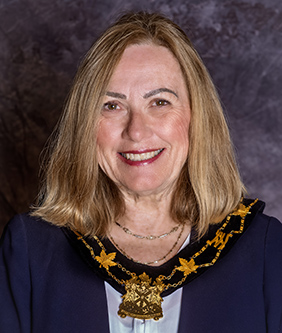
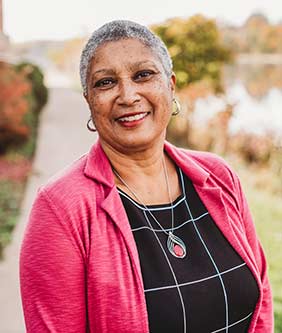
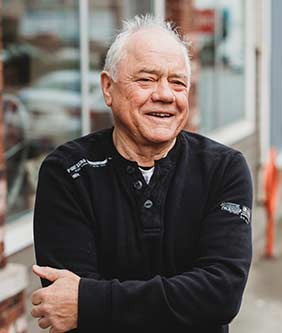
Each ward is represented by two Councillors, for a total of six Councillors on Town Council, along with the Mayor. Residents vote for the Councillors representing their ward during municipal elections, which are held every four years.
Who represents each ward?

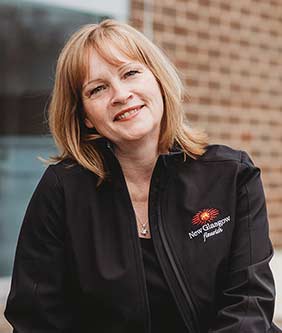


What is the role of the Mayor?
The Mayor serves as the head of Council and helps provide leadership for the municipality. The Mayor chairs Council meetings, represents the Town at official functions and events, and works alongside Council and staff on municipal priorities.
The current Mayor of New Glasgow is Mayor Nancy Dicks.
What is the role of the Deputy Mayor?
The Deputy Mayor is a member of Council selected to support the Mayor and serve in the Mayor’s place when needed.
Responsibilities of the Deputy Mayor may include:
- Chairing Council meetings when the Mayor is unavailable
- Representing the Town at events and functions
- Supporting leadership and communication within Council
The current Deputy Mayor for the Town of New Glasgow is Councillor Dawn Peters.
What do Councillors do?
Councillors represent the residents of their ward and help make decisions that benefit the community as a whole. They attend meetings, review reports and recommendations, discuss community issues, and vote on municipal matters.
Residents are encouraged to contact their Councillor to ask questions, share concerns, or provide feedback.
Do Councillors only represent their ward?
While Councillors are elected by residents within their ward, all members of Council are responsible for making decisions that support the overall wellbeing of the entire community.
Council works together to consider the needs and priorities of New Glasgow as a whole.
What does Council do?
Council responsibilities include:
- Approving annual operating and capital budgets
- Setting property tax rates
- Approving bylaws and policies
- Supporting long term planning and community development
- Listening to resident concerns and feedback
- Attending Council and committee meetings
- Supporting public engagement opportunities
- Making decisions about municipal services and infrastructure
What can Council NOT do?
There are important limits to the authority of Council and individual elected officials.
Council cannot:
- Change provincial or federal laws
- Direct Town staff individually
- Approve projects or spending without a formal Council decision
- Waive taxes or fees without proper legal authority
- Prioritize services outside approved procedures unless there is an emergency
- Promise funding, projects, or services without Council approval
- Use their position for personal benefit
Council decisions must follow legislation, municipal policies, budgets, and established procedures.
How are decisions made?
Many municipal decisions follow a process that includes:
- Identifying an issue or opportunity
- Staff research and recommendations
- Council discussion and debate
- Public engagement or public hearings when required
- A formal vote by Council
Some decisions may take time due to budgeting, engineering reviews, provincial regulations, procurement requirements, or public consultation.
What happens after Council makes a decision?
Once Council makes a decision, Town staff are responsible for carrying out the direction. This may include preparing documents, coordinating projects, communicating updates, applying for funding, issuing tenders, or completing work within approved budgets and policies.
What ward do I live in?
Wards help ensure residents across the community have local representation on Council. Each resident belongs to one of New Glasgow’s three wards and is represented by two Councillors.
Residents can use the Ward Map, if they are unsure which ward they live in.